IB Visual Arts Tutoring Online
Expert IB Visual Arts Tutoring for Students Who Want to Strengthen Their Creative Work, Portfolio and Assessment Performance
IB Visual Arts is a creative and academically demanding subject within the IB Diploma Programme.
Students are expected to develop original artwork while also investigating artists and cultural contexts, experimenting with different materials, documenting their creative process and reflecting critically on their decisions.
As a result, success in IB Visual Arts requires much more than artistic talent.
Many parents contact us because their child:
- Has strong artistic ideas but struggles to explain them clearly
- Finds it difficult to document the creative process
- Is falling behind with portfolio work
- Does not fully understand the IB assessment requirements
- Needs help connecting artist research to their own practice
- Struggles with written analysis and critical reflection
- Needs support selecting and presenting resolved artworks
- Wants to improve a predicted grade for university applications
- Needs additional guidance beyond what is available in the classroom
- Is finding it difficult to balance Visual Arts with TOK, CAS and the Extended Essay
At IBMeta, we connect students with experienced IB Visual Arts educators who provide personalized online support according to each student’s course level, assessment session, artistic interests and academic goals.
Personalized Support for IB Visual Arts Students
Every Visual Arts student follows a different creative path.
Some students need help developing an initial idea into a meaningful artistic inquiry. Others have produced substantial work but need support organizing their evidence, improving written reflection or preparing an assessment submission.
Our tutoring is adapted to:
- The student’s current level of progress
- Standard Level or Higher Level
- The assessment guide followed by the school
- The student’s final assessment session
- Artistic interests and preferred media
- School deadlines
- Predicted-grade objectives
- Feedback received from the schoolteacher
- Areas of strength and difficulty
- University or art-school ambitions
Lessons are designed to help students become more thoughtful, organized and independent artists.
What Makes IB Visual Arts Challenging?
IB Visual Arts combines creative practice with research, analysis, reflection and presentation.
Students must learn how to:
- Develop clear artistic intentions
- Explore meaningful personal or conceptual questions
- Investigate artists and artworks from different contexts
- Experiment with materials, techniques and creative strategies
- Document changes, discoveries and unsuccessful attempts
- Explain how research influences their own work
- Reflect critically on artistic decisions
- Use visual evidence effectively
- Communicate through both images and writing
- Select relevant evidence for assessment
- Present a coherent body of work
- Manage long-term creative projects and deadlines
A visually impressive final artwork may not be enough if the student has not demonstrated the inquiry, experimentation and reflection behind it.
Similarly, extensive research may receive limited credit if it remains disconnected from the student’s own artistic practice.
Our tutors help students understand how creative production, contextual research, documentation and assessment work together.
IB Visual Arts SL and HL Support
IB Visual Arts is available at both Standard Level and Higher Level.
Students at both levels are expected to develop increasingly independent artistic practices. However, HL students generally work with greater breadth, depth and autonomy.
Our tutors adapt lessons according to:
- Whether the student is taking SL or HL
- The depth of research expected
- The range of art-making forms explored
- The level of independence required
- The student’s assessment tasks
- The amount of work already completed
- The quality of the existing documentation
- The time remaining before submission
Students can receive ongoing support throughout the course or targeted guidance for a specific assessment component.
Support for the Current and New IB Visual Arts Courses
IB Visual Arts is currently moving between two assessment models.
Students completing the course in the 2026 assessment session follow the model based on the Comparative Study, Process Portfolio and Exhibition. Students assessed from May 2027 follow the revised course, which places art-making as inquiry at its centre and organizes learning around creating, connecting and communicating.
Therefore, it is essential that tutoring is matched to the correct guide and assessment session.
Our tutors first establish:
- Which Visual Arts guide the school is using
- Whether the student will be assessed in 2026 or from 2027
- Which components the student must submit
- Which requirements apply to SL or HL
- What work has already been completed
- Which school deadlines must be respected
This prevents students from relying on outdated requirements or preparing work for the wrong assessment model.
Meet Some of Our IB Visual Arts Educators
Our network includes experienced IB teachers, examiners, coordinators and subject specialists.
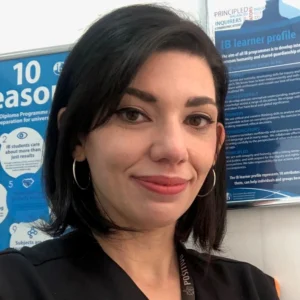
Juliana – Brazil
IB Visual Arts Teacher | DP Coordinator | IB Examiner
Juliana Lazari is an experienced IB educator and current IB Diploma Programme Coordinator at Positivo International School. She teaches IB DP Visual Arts and supports students in CAS, TOK, Language A and B, and the Extended Essay.
She has held a range of IB leadership roles, including PYP Head Teacher and CAS Coordinator, and is also an IB Visual Arts examiner. Her broad experience across the IB continuum helps students strengthen both their academic performance and their understanding of IB assessment expectations.
Languages: Spanish, English.
These profiles represent examples of educators within our network. Tutor matching depends on subject requirements, language preferences, availability, and student needs.
Support for Students Assessed in 2026
Students completing the previous Visual Arts course work with three principal assessment components:
- Comparative Study
- Process Portfolio
- Exhibition
The Comparative Study and Process Portfolio are externally assessed, while the Exhibition is internally assessed.
Comparative Study Support
The Comparative Study requires students to investigate and compare artworks by different artists from relevant cultural contexts.
Students must move beyond basic description and examine areas such as:
- Formal qualities
- Materials and techniques
- Function and purpose
- Cultural and historical context
- Meaning and interpretation
- Similarities and differences
- Relationships between artwork, artist and audience
- Cultural significance
- The influence of research on the student’s own practice, where required
Our tutors help students:
- Select artworks that allow meaningful comparison
- Develop a clear analytical structure
- Distinguish description from analysis
- Support observations with visual evidence
- Research reliable and relevant sources
- Compare artworks consistently
- Use appropriate art terminology
- Organize screens clearly
- Balance written and visual content
- Connect research to personal artistic practice
The objective is not simply to collect information about artists. Instead, students learn how to construct a focused visual and contextual argument.
Process Portfolio Support
The Process Portfolio should demonstrate how the student has investigated, experimented, developed and refined ideas throughout the course.
It is not simply a digital version of a sketchbook or a collection of finished pieces.
Students need to show evidence of:
- Initial ideas
- Artistic investigations
- Experimentation with materials
- Technical development
- Alternative approaches
- Changes of direction
- Successful and unsuccessful attempts
- Connections to artists
- Critical reflection
- Development over time
Our tutors support students with:
- Identifying gaps in the creative process
- Selecting the strongest evidence
- Organizing evidence into a coherent sequence
- Improving the connection between images and writing
- Explaining why decisions were made
- Reflecting on the results of experiments
- Showing development rather than repetition
- Connecting contextual research to studio practice
- Improving visual presentation and readability
- Avoiding unnecessary or repetitive screens
Students are encouraged to document their process consistently rather than attempting to reconstruct it shortly before submission.
Exhibition Support
For the Exhibition, students select and present resolved artworks as a coherent body of work.
They must consider both the quality of the individual works and the relationship between the pieces.
Our tutors can help students with:
- Selecting resolved artworks
- Identifying connections between pieces
- Evaluating the coherence of the body of work
- Clarifying exhibition intentions
- Considering the intended audience
- Planning the arrangement of artworks
- Preparing exhibition texts
- Developing the curatorial rationale
- Connecting curatorial choices to artistic intentions
- Reviewing photographic documentation
- Planning the final stages before submission
Students remain responsible for all artistic and curatorial decisions. The tutor’s role is to help them reflect on those decisions and communicate them more clearly.
Support for Students Assessed from 2027
The revised Visual Arts course has its first assessment in May 2027.
It places art-making as inquiry at the centre of the course. In addition, the syllabus is organized around three connected areas:
- Create
- Connect
- Communicate
The new assessment model includes an art-making inquiry portfolio for both SL and HL, a connection study for SL, an artist project for HL and an internally assessed coherent body of five resolved artworks.
Art-Making Inquiry Portfolio Support
The art-making inquiry portfolio requires students to demonstrate how they developed their artistic practice through one or more personal lines of inquiry.
The focus is not only on producing finished artwork. Students must also show how their artistic intentions guided experimentation, discovery and the development of a personal visual language.
Our tutors help students:
- Develop meaningful lines of inquiry
- Clarify artistic intentions
- Connect questions to art-making
- Explore different art-making forms
- Use varied creative strategies
- Document experimentation
- Reflect on discoveries and changes
- Demonstrate progression
- Select relevant visual and written evidence
- Balance images and explanation
- Organize the portfolio coherently
A strong portfolio should make the development of the student’s thinking visible.
Connection Study Support for SL
The SL connection study requires students to situate one of their resolved artworks in context and investigate its connections with artworks by other artists.
Students need to consider:
- Their personal or cultural context
- The context of the selected artists
- Meaning and cultural significance
- Visual and conceptual relationships
- The influence of research on their artistic decisions
- Connections between their own artwork and the work of others
Our tutors support students with:
- Selecting a suitable resolved artwork
- Identifying meaningful artists and connections
- Avoiding superficial comparisons
- Researching cultural context
- Explaining cultural significance
- Connecting research to creative decisions
- Organizing visual evidence
- Developing a focused analytical argument
The student’s own work must remain at the centre of the investigation.
Artist Project Support for HL
The HL artist project requires students to develop, realize and curate a stand-alone artwork in a specific context.
Students have greater independence and must consider what they want to communicate, how they will communicate it and how an audience may experience the completed work.
Our tutors can help students with:
- Defining the project’s artistic intentions
- Investigating relevant artists and contexts
- Planning a sustained creative process
- Considering the intended audience
- Exploring the relationship between artwork and location
- Using feedback constructively
- Documenting artistic development
- Evaluating creative decisions
- Developing curatorial thinking
- Selecting evidence for submission
- Connecting the completed work to its context
The goal is to maintain coherence between research, artistic intention, experimentation, realization and presentation.
Body of Resolved Artworks
Under the revised course, both SL and HL students submit a coherent body of five resolved artworks for internal assessment, although the detailed requirements differ between the two levels.
Our tutors help students consider:
- Which works best represent their artistic development
- Whether the selected pieces form a coherent body
- How concepts and intentions connect the works
- Whether each artwork is technically and conceptually resolved
- How the works relate to the student’s broader practice
- Whether different pieces add distinct value
- How to write concise accompanying texts
- How to explain the selection process, where required
- How to photograph and present the artworks clearly
More artwork does not automatically result in a stronger submission. Careful selection is essential.
Developing Artistic Intentions
Many students begin with a broad theme rather than a clear artistic intention.
For example, a student may want to explore identity, nature, memory, conflict or technology. However, these themes need to be developed into more specific artistic questions.
Our tutors help students consider:
- What they genuinely want to investigate
- Why the subject is personally or culturally significant
- What they want the audience to experience
- Which visual choices support the intended meaning
- Which materials and techniques are appropriate
- Which artists or contexts may inform the inquiry
- How experimentation might transform the original idea
Tutors do not provide the student with an artistic concept. Instead, they use questioning and discussion to help the student develop and articulate an authentic direction.
Contextual Research and Artist Investigation
Research should influence the student’s thinking and artistic practice.
It should not become a disconnected artist biography or a collection of copied images.
Students learn to investigate:
- The context in which an artwork was created
- The artist’s intentions
- Materials and processes
- Formal and conceptual choices
- Cultural significance
- Relationships between artist, artwork and audience
- Alternative interpretations
- Connections to their own artistic practice
Our tutors help students turn research into a source of experimentation and creative development.
Experimentation with Materials and Techniques
Meaningful experimentation involves testing possibilities and learning from the results.
Students may explore:
- Drawing
- Painting
- Printmaking
- Photography
- Sculpture
- Installation
- Digital media
- Film and moving image
- Mixed media
- Textile practices
- Three-dimensional forms
- Scale
- Surface
- Colour
- Composition
- Space and presentation
Students should record what they attempted, what they discovered and how the experiment influenced their next decision.
An unsuccessful experiment may still provide valuable evidence when it leads to thoughtful reflection and further development.
Visual Arts Journals and Process Documentation
Consistent documentation helps students prepare stronger assessment submissions.
Students may record:
- Initial ideas
- Inquiry questions
- Artist research
- Cultural and contextual research
- Material tests
- Technical experiments
- Work in progress
- Feedback
- Problems encountered
- Changes of direction
- Reflections
- Decisions about resolved artworks
- Sources and references
Our tutors help students create a manageable routine for documenting work throughout the course.
This is far more effective than attempting to recreate months of development shortly before a deadline.
Written Analysis and Reflection
Some students are confident when creating artwork but find it difficult to explain their decisions in writing.
Others produce long descriptions without demonstrating critical analysis.
Our tutors help students write more clearly about:
- Artistic intentions
- Specific visual evidence
- Materials and techniques
- Decisions and consequences
- Connections between research and practice
- Successful and unsuccessful experiments
- Changes made during development
- Audience and context
- Meaning and cultural significance
- Limitations and unresolved questions
Written material should add understanding rather than repeat what is already visible in an image.
Selecting and Presenting Evidence
Assessment submissions require careful selection.
Every image, annotation and reflection should demonstrate something relevant.
Our tutors help students ask:
- What does this evidence show?
- Does it demonstrate inquiry or development?
- Is it different from the previous example?
- Is the connection to the artistic intention clear?
- Does the writing explain why the evidence matters?
- Is the visual material readable?
- Is the sequence logical?
- Is important evidence missing?
- Is too much space being used for description?
- Does the selected material reflect the student’s strongest work?
This process helps students create submissions that are focused, coherent and easier for an examiner to understand.
Time Management for IB Visual Arts
Visual Arts develops over two years. Therefore, many of its most demanding requirements cannot be completed effectively at the last minute.
Students need time to:
- Investigate
- Experiment
- Produce
- Reflect
- Receive feedback
- Change direction
- Resolve artworks
- Photograph work
- Write and edit
- Select evidence
- Organize digital submissions
Our tutors help students divide large tasks into realistic stages.
A planning session may identify:
- What has already been completed
- Which components are behind schedule
- Which evidence is missing
- Which works require further development
- Which issues should be discussed with the schoolteacher
- Which deadlines are fixed
- What can realistically be achieved
Extended Essay Support in Visual Arts
Students may choose Visual Arts as the subject area for their Extended Essay.
A Visual Arts Extended Essay requires focused research, visual analysis, appropriate contextual evidence and a clear academic argument.
Students may need support with:
- Selecting an appropriate area of investigation
- Developing a focused research question
- Identifying suitable artworks and sources
- Planning the research process
- Conducting visual analysis
- Connecting evidence to the argument
- Organizing the essay
- Using art terminology accurately
- Evaluating different interpretations
- Developing conclusions
- Understanding subject-specific expectations
Tutors provide guidance and feedback while ensuring that the research and writing remain entirely the student’s own.
Academic Integrity and Constructive Feedback
IB Visual Arts tutoring should support the student’s creative and analytical development without taking control of the work.
Our tutors may provide:
- Questions that encourage deeper thinking
- Feedback on clarity and organization
- Identification of missing evidence
- Discussion of alternative approaches
- Guidance on planning
- Explanation of assessment requirements
- Feedback on whether evidence supports the student’s conclusions
However, students remain responsible for:
- Artistic ideas
- Creative decisions
- Production of artworks
- Research
- Written analysis
- Selection of evidence
- Curatorial choices
- Final submissions
Why Families Choose IBMeta
Families choose IBMeta because we focus specifically on International Baccalaureate education.
Our network includes experienced IB educators, examiners, coordinators and subject specialists who understand the creative and academic demands of the Diploma Programme.
Students benefit from:
- Specialized IB Visual Arts support
- Experienced IB educators and examiners
- Personalized one-to-one lessons
- Flexible online scheduling
- Support for SL and HL
- Guidance matched to the correct assessment session
- Portfolio and assessment planning
- Feedback on written and visual evidence
- Support in English, Portuguese and Spanish
- Help managing Visual Arts alongside the DP Core
Our objective is not to direct the student’s artwork. Instead, we help students become more reflective, organized and independent artists.
Supporting Students Across Brazil and Latin America
Our online model allows students to access experienced IB Visual Arts educators regardless of location.
We support students attending international and IB schools in:
- Brazil
- Argentina
- Colombia
- Ecuador
- Mexico
- Peru
- Chile
- Other countries in Latin America and worldwide
Lessons are conducted online and adapted to the student’s time zone, school calendar, assessment session and academic goals.
Students looking for related support may also be interested in our Theory of Knowledge, Extended Essay and CAS guidance services.
Who Can Benefit from IB Visual Arts Tutoring?
Our tutoring may be suitable for students who:
- Are studying IB Visual Arts SL or HL
- Need regular support throughout the course
- Are struggling to develop artistic intentions
- Need to improve process documentation
- Have fallen behind with portfolio work
- Find written reflection difficult
- Need to connect artist research with their own practice
- Need support under the 2026 assessment model
- Are following the revised course assessed from 2027
- Need help with the Comparative Study
- Need help with the Process Portfolio
- Are preparing an Exhibition
- Need support with the art-making inquiry portfolio
- Are completing the SL connection study
- Are developing the HL artist project
- Need to select a coherent body of resolved artworks
- Want to improve a predicted grade
- Are aiming for a grade 6 or 7
- Are preparing an art or design portfolio for university
- Need help balancing Visual Arts with TOK, CAS and the Extended Essay
Support can be ongoing or focused on one particular assessment, deadline or area of difficulty.
Find the Right IB Visual Arts Tutor
Whether your child needs regular support, help organizing a portfolio, guidance with artistic inquiry or targeted assistance before an assessment deadline, IBMeta can help.
We begin by understanding the student’s:
- Course level
- Assessment session
- Current progress
- Artistic interests
- School requirements
- Preferred language
- Main challenges
- Academic goals
We then recommend the most suitable IB Visual Arts educator from our network and arrange a free introductory meeting so that the student and tutor can discuss their needs before lessons begin.
Related IB Support Services
IB Subject Tutors
Below is a selection of our IB tutors. We offer support in many additional subjects depending on student needs and tutor availability.
- IB Academic Mentorship
- IB Biology HL Tutor Online
- IB Business Management Tutor
- IB Chemistry HL Tutor
- IB Computer Science Tutor
- IB Economics Tutor
- IB English A Tutor Online
- IB Extended Essay Help
- IB Internal Assessment Help
- IB Math AA HL Tutor
- IB Physics Tutor
- IB Spanish A Tutor Online
- IB Visual Arts Tutor
- IB Environmental Systems and Societies
- TOK Theory of Knowledge Help
IB Academic Support
- IB Tutoring
- IB Examiners
- Do You Really Know the IB? Take the test
- IB Predicted Grades
- IB Study Plans
- Last-Minute IB Help
- IB Exam Preparation
- Expert IB Tutors
- Online IB Diploma Tutoring
- IGCSE Tutors Online
- Meet some of the educators